Here is the full, unabridged transcript of my conversation with Wayne Rainey, with additional photos.

Debate often arises in motorsports over the definition of a legend, and what constitutes legendary status. Is it the number of wins across a career? National and/or world titles? Is it philanthropic work, contributions to the sport and industry? Overcoming tragedy or adversity? Perhaps it's personal honor, integrity, influence? By any definition-
Wayne Rainey is a legend.
In the span of a decade, Rainey amassed a resume of wins and titles that would cement his status as an icon of motorcycle road racing. He won the AMA National Championship in 1983 and 1987, and claimed the coveted Daytona 200 title in '87 as well. Rainey moved onto the world stage, capturing the renowned Suzuka 8-Hours endurance race with teammate Kevin Magee in 1988. Rainey then dominated the GP World Championship for three years, sweeping the 500cc premier class from 1990-92. A career-ending and life-altering injury changed everything in 1993, resulting in permanent paralysis from the chest down.
But Wayne Rainey didn't stay down.
He reinvented himself for the rest of his journey, managing AMA and GP teams, participating in SuperKart racing, and ultimately birthing the dream that would become MotoAmerica.
I had opportunity to sit down with Wayne for a few minutes, at the final round of the 2017 MotoAmerica season at Barber Motorsports Park in Birmingham, Alabama. What ensued became a candid, insightful conversation, revealing something of the heart and soul of the man.
RB- I remember following your racing career back in the day. The Suzuka 8-Hours was impressive! Very few people even know what that is.
WR- It's a bad-@$$ race, for sure! I was racing Gran Prix's that year, running at the highest level in motorcycle racing, then went and did the Suzuka, and realized I was NOT at the highest level! The Japanese take that race, and only that race, as the number one race they all want to win, and Gran Prix second. It was so exciting to win that.
RB- I can't even imagine! At what age were you first introduced to motorcycles? How did you ever catch the riding/racing bug?
WR- My father got into soapbox derby, go-cart racing, and then motorcycles. He had a 90cc Yamaha in the mid-60s, and was a tinkerer as well as a rider. I was about 6 years old when I first started riding, on a little Honda Cub. The Cub was kind of tall for a 6-year old, so my dad put a seat right where the fuel tank meets that under bone. Handlebars above me, seat hitting my back, and I was sitting down in it! First time I ever rode it, we were in the garage, and he said, "Keep your foot on the shifter, give it a little gas, and let off the shifter." I wheelied that thing right into his cabinets! Needless to say, I was a little intimidated, running out of the garage crying! I came back though.
RB- Indeed you did. When did you first start competing?
WR- I started racing at the age of 9. In Southern California, we had ten different race tracks, and could race seven days a week. A definite hotbed of dirt track racing. We lived 10 miles from Ascot Park, and my dad built bikes to race the Ascot Half-Mile. I'd go with him every Friday night as a young lad, and learned all the riders by name, their numbers, everything about them. I ate, slept, and drank the racing. When I was old enough, I finally got to go do it myself.

RB- You really cut your teeth in flat track.
WR- Yeah, I didn't do my first road race until 1980, when I was 20 years old. Never even been on a track before then.
RB- What attracted you to road racing?
WR- I was dirt tracking and Kawasaki wanted to sell KX250 engines to dirt trackers. They contacted me, a “So Cal” kid. They had approached Eddie Lawson, asking "Who do you see that we could develop that motor with?" Eddie recommended me, so they reached out to me- "We got this engine, we'd like to build a short track chassis out of it. Will you run it? We'll buy your tires, pay your gas,..." and I quickly said, "You got a deal!" So we went out and had some success with it, and they soon asked, "Have you ever considered road racing?" I had not, never really been interested in it aside from reading about it in the magazines, so they sent me to the Keith Code's California Superbike School. I went through the training, progressed pretty quick, and they asked if I wanted to try a race. So I tried it. I ended up winning 15 of my 16 races! They later contacted me again, saying, "There's an AMA National race in Loudon, New Hampshire. If you can be there in three days, we’ll have a bike there waiting for you." I was going to race in my first pro 250 novice class. A buddy and I drove cross country to the race, still with my dirt track leathers and gear. It rained during the race, and I had never ridden the bike, never ridden on this track, never ridden in the rain, and we won the race by 20 seconds! Next day, Kawasaki showed up at the race track with a contract to race Superbikes for them the next two years.

RB- Do you think your flat track racing experience gave you an edge in any way, when you transitioned to road racing?
WR- I think so, and it helped Kenny Roberts before me. Freddie Spencer did it that way too. All the American world champions had a flat track background. The 500cc GP bikes were wicked machines. It took a special style to adapt to them. The Europeans are doing it now, but they weren't back then. Rossi, Marquez, all those guys, work off-season on dirt track, but we were doing it decades ago. So I'd say it was an easy transition, easy translation of skills. The natural dirt trackers were always the Americans.
RB- I remember when the grids and the podiums were filled with Americans.
WR- We didn't know how good we had it, did we? Whole front rows would be Americans, podiums would be all Americans,... Now, there's no one in the world championships, in MotoGP. There's P.J. Jacobsen running well in World Supersport, but sadly, with Nicky's passing, P.J. is it, on the world stage. We hope to change that.
RB- There's been a lot made of your rivalry with Kevin Schwantz. How did that develop? Did something happen, or was it just two fierce competitors battling it out across the years for dominance?
WR- Yeah, by that time I guess I was kind of an established guy. Schwantz came along, with a lot of natural talent, and I saw he was going to do whatever it took to beat me. He really raised my game, because I didn't want him to beat me. We raced each other really hard, much harder than the other guys. I guess we didn't like each other, because we didn't like how we were treating each other on the track! We were both determined to beat the other. I like to think I got the best of Kevin every single year, but the rivalry certainly made us both better.
RB- But in the end, there can be only one.
WR- People win championships for all kinds of reasons. But the one thing that's always the same is, the guy with the most points at the end of the season, wins. I was a very consistent guy, was on the podium most of the time, and ultimately, consistency wins championships. And it wasn't just Kevin I was battling. There was Mick Doohan, Eddie Lawson, a lot of really huge names out there then. Exciting times for racing.
RB- You ran for Kenny Robert's teams a number of years, right?
WR- I ran for him '88-93, for six years. We had known each other, and I had started hanging out with him a bit, so he put a team together for me to race in Europe. I ran 250cc bikes my first year with him. Really didn't think I was ready for it, but we did it, and I got to see the future.
RB- Would you say you really peaked, really took off, under his tutelage? Did he help refine, tune your skills even more?
WR- Yeah, definitely! Kenny and I really clicked. He had plenty of riders under him who didn't have the success we had together. I think he saw in me someone who would do everything to get the most out of myself, my team, the machine, so he fostered that environment for me. A lot of my teammates came and went, but there's no doubt the friendship, relationship we had was special.

RB- 1984 was a tough year though.
WR- Oh, yeah, I hated it that year, thought Kenny was a prick! We had to push-start the bikes, and often by the time we got started, I was like 20 seconds behind the pace car! So not only was I having to catch and pass the pace car, they usually had no idea some weenie was behind them! And I'd have to listen to him as I was push-starting the bike, yelling, "Push harder, you $!&?-head!" But he pushed me, for sure. Made me a better racer.
RB- It’s uncomfortable for me to bring up, but I watched footage of your fateful crash at Misano in '94. A major life change, in every way.
WR- Yes it was.
RB- How did you personally work through that, overcome it, and reinvent yourself?
WR- (pauses to reflect) That was 24 years ago, September 5. So it's not really that long ago, and yet 24 years is a long time. I'd probably now do a few things differently, but here was this 33 year old man, world champion, did everything on my own, then suddenly, I needed help going up a step, or grabbing a cup, or anything. The way you do everyday functions, how you get in and out of the car, or the bathroom and shower, the bed, everything changes. The first thing you see in the morning is that wheelchair, and the last thing you see at night is that wheelchair. So it's become my legs. You either adapt, or you die.
RB- Adapt or die- physically, mentally, emotionally, spiritually.
WR- It was a very tough time. It took a few years, a lot of mistakes, some deep pockets of grief, but you know, I have a strong faith in the Lord, and that pulled me through, that's what worked for me.
RB- You worked through it all, and your faith carried you.
WR- I had a 10 month old son at the time, and he only ever knew me in a chair, so I had to be strong for him, had to show him that his dad's going to be challenged, but everyone is challenged in their own way, every single day. You can whine about it, or pull your pants up like a big boy. It still could get worse too, I don't know. So I just live every day.

RB- You've accomplished so much in the sport, on and off the track. What are your fondest memories, proudest achievements?
WR- I have so many memorable moments, and I'm still creating them. Obviously, being a very successful motorcycle racer, to have been able to make a career out of it. I loved racing motorcycles! I loved the competition, loved the challenge, loved racing at the highest level. I loved every win that I got, loved every 10th place that I got. I remember the battles, the rivalries. So I don't think any one particular thing sticks out more than others. I just try to be a decent dude, show courtesy to everyone I meet. Now, in my current situation, I try to pay attention to what some people have to go through when they're physically challenged. I'm sensitive to that.
RB- To me, what you've endured, where you are now, only adds to your mission.
WR- Every day we wake up, we have no idea what it holds, where it will take us. Nicky Hayden is a perfect example of that.

RB- As I stated in my article about him after his death- life is fragile, life is fleeting, so live for a higher calling. You're still making a difference, in racing and beyond.
WR- I think you're right, only because I know what the outcome is now. I didn't when I was still racing. Won three world championships, on track to win a fourth. Where do you go from there? Some say the only place to go is down, but I didn't see it that way. I just wanted to keep winning as long as I could, and keep getting better. I was getting to the point where I wasn't going to accept anything but 1st.
RB- Looking at modern racers like Rossi, Marquez, Jonathan Rea- it doesn’t matter how many they’ve won, the next one is still a thrill.
WR- Rossi, he’s a special case. He came up through a different era than I did, but that hunger to win is still there with him. He obviously still has fun doing it.
RB- How was the dream for MotoAmerica born?
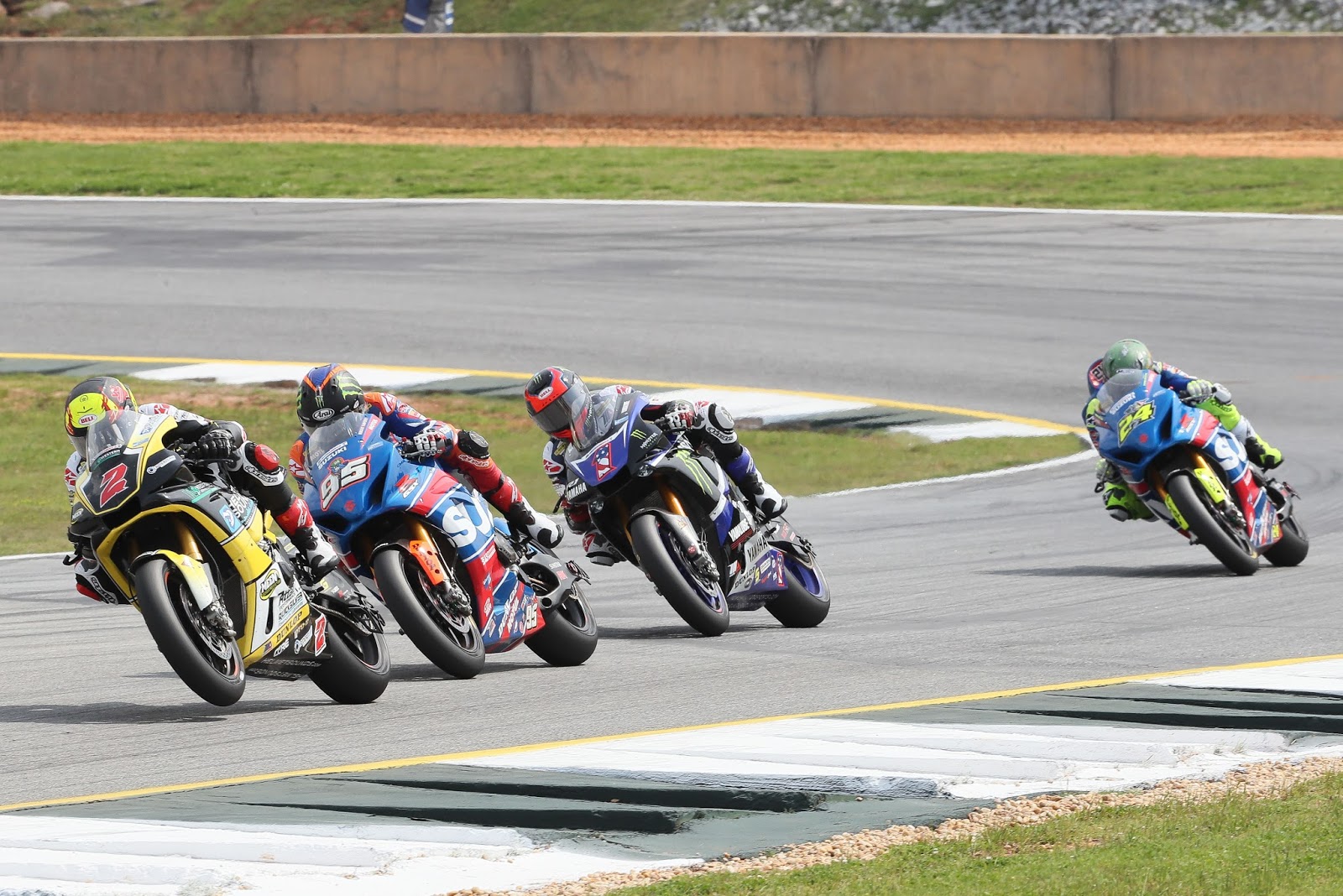
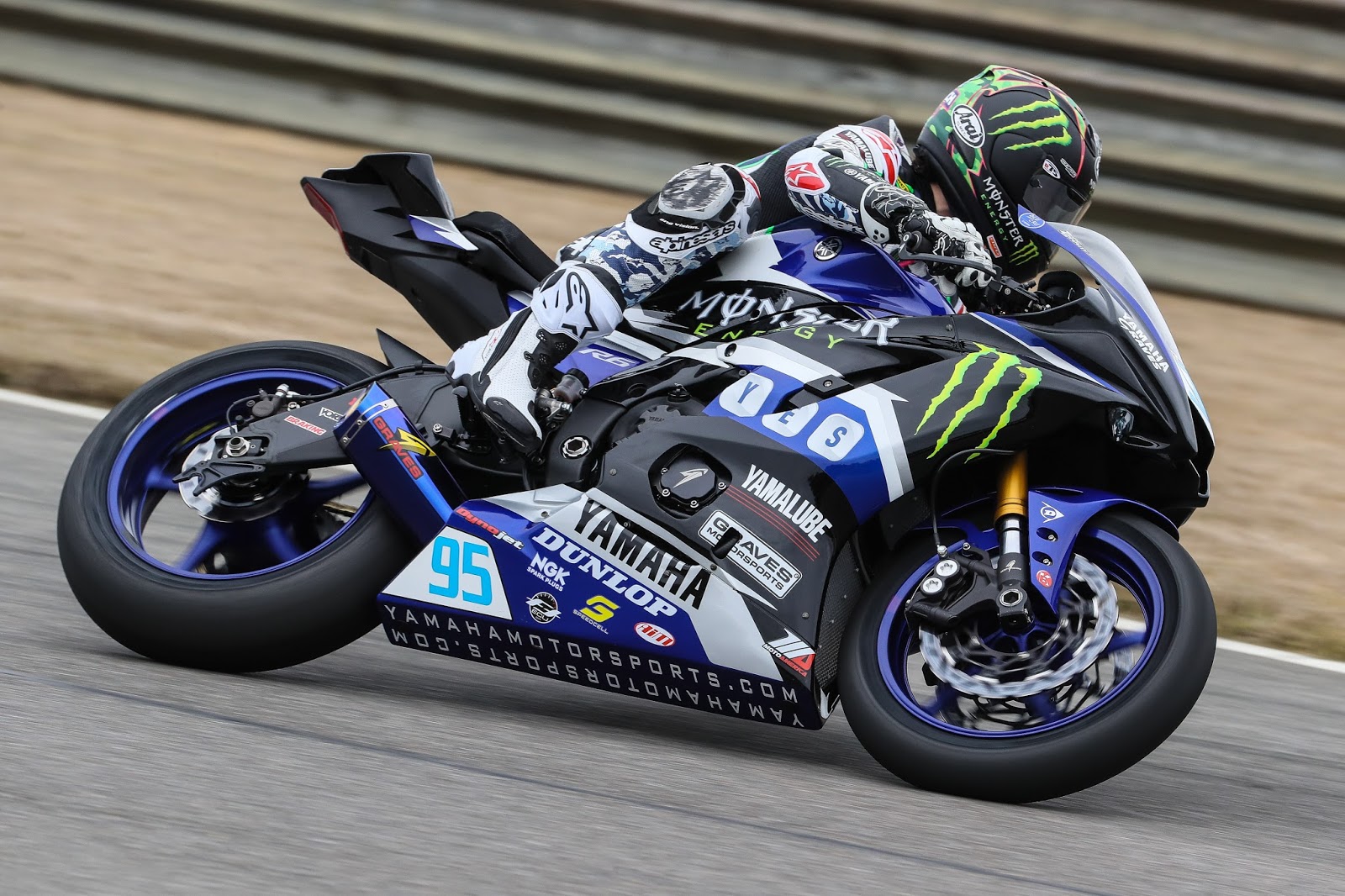
WR- My partners, Richard Varner and Terry Kargas, were building a motorcycle and through a mutual friend, asked if I would come help. I was pretty far away from the sport then, but that relationship started me back in the industry, calling my old contacts about parts. This bike had the look of a 1980s road race bike, but in actuality, it was a 2010 Yamaha R1. Back in the sport, I was getting a lot of questions- “What’s going on with American road racing?” I still had a relationship with Dorna (the international sanctioning body), so I started thinking, “There’s not many Americans; maybe I should start a young rider series.” There were only three U.S. Gran Prix races left, and one World Superbike race. My idea was, run a young spec class, and run it in the World Championship races held here in the States, Saturdays and Sundays of each, about an 8-race series. Joe Campbell from Laguna Seca asked me, “Why don’t you just fix the AMA racing?” Initially, we couldn’t get a deal with DMG, so I returned to my original idea of doing our own thing. That started gaining momentum and support, so pretty soon the DMG came back and said, “Hey, let’s talk about this again.” We worked a completely different deal the second time, so that’s basically how it all started. It took time to evolve, and it was never something I thought we could achieve, but I figured, unless you go all-in and try, you’ll never know. I had the right partners, for sure. Chuck Aksland from my Gran Prix days came onboard, joining Terry and Richard with me, and all these pieces came together at the right time. So now we are trying to make a go at it, revive American road racing.

RB- Here at the end of your third season, how would you rate the progress?
WR- You know, from where we started, late in 2015, I think our skeptics are now fans! And some of the manufacturers, who thought we’d be gone after three races, see we are still here after three years. We began with live-streaming on Fans Choice, and now we have live TV with BeIn Sports. We have a good schedule, we have solid teams, and year 4 will see an all-Superbike class. We made changes this year to the Stock 1000 class that shows they can be very competitive. We have a team that the rider (Kyle Wyman) drives his truck to the race, engineers his own bike, and he almost won the race in New Jersey! If a guy can do that against the factory riders, we’ve done the right thing. So many of the Stock 1000 guys have run well this year- Hayden Gillim, Jason DeSalvo, Mathew Scholtz, all running up front with the factory guys. This next year, it’ll be an easier sell for them, that they will be Superbike teams, instead of Stock 1000.
RB- I’ve been watching the growth of MotoAmerica, parallel with the explosion of American Flat Track. They both seem to be feeding off the growing popularity of each other.
WR- Yeah, basically, dirt track and road racing are cousins. They’ve always been in the U.S. But they are run separately now, and actually are facing the same problems we have here. Indian is huge there, and they have the best riders, filling the podium at nearly every race, and here, we’ve got four factory bikes, and then you’ve got everybody else. So we are all trying to make it more marketable, so they all can go out and find sponsorships. We’ve had three years to try and stabilize our sport. We think we’re pretty stable now, and with the jump to Superbike, we’re going to now sell it to the fans.
RB- What do you see as the future of road racing in America?
WR- I hear racers say, “Oh, we’ll never get back to the level of the Europeans. They’re doing everything we did except they are starting at a younger age. They have more racers, better tracks, etc.” I say, give up that attitude! I tell you what, I’ve said, “Unless you think you can go over and beat those guys, they’re going to wax you, because you’re going to their house. We’re Americans. There’s a culture here they will never have. They don’t live here, didn’t grow up here.” As Americans, we automatically think we need to be better. I want our riders to believe that, to believe in themselves.
RB- That day is coming, I believe, soon.
WR- We’ll soon see the rider who believes in himself, has the natural speed, and the desire to go race in MotoGP, which means racing in Europe, at the highest level. We are trying to make MotoAmerica a competitive championship where, when a racer is ready to make that step, they’ll only have to learn the tracks and the bikes. They’ve already done the racing here.
RB- In the next year or two, what is MotoAmerica positioning itself to do to bring road racing back into the American consciousness?
WR- Honestly, we need guys like you that believe in what we’re doing, to help us build it up. We want to recapture the fans we lost, as well as go get new fans. It’s a new generation. It’s not, “win on Sunday, sell on Monday” anymore. We know we have to host an event, with a motorcycle race. A lot of things happening at the track- bands, fashion shows, bounce houses and activities for kids, vintage shows and races. People love seeing those old bikes, hearing them run around the track! We have to remember our past. That’s where we came from. We want to build the event, market that, invest in that. All of our investment has been into stabilizing. Now, we can start working on growing.
RB- I’m excited about the future of American road racing, glad you are at the helm of it. I’m not just a writer, I’m a fan.
WR- Well, we appreciate you coming out and supporting us. I hope every time you can come out, you see something new, something exciting.
RB- Your riders have a passion and competitiveness that draws fans. I saw that evidenced at the Road Atlanta round, when Beaubier (2016 champion) and Elias (now the 2017 champion) nearly came to blows in the press room following the race.
WR- Yeah! I want the championship to mean something. It’s got to be real. That was raw, real.
RB- Even the 600 Supersport class- I talked extensively with Garrett Gerloff (now the 2-time class champion), a young man of deep faith, humility, and integrity, and yet a fierce competitor on the track. To me, he well-represents the future of the sport here in America.
WR- Well said! If he goes up to Superbike, and starts to run with Elias, Hayden, Beaubier, I’m telling ya, he’ll fly out of this place. I told him, “Everybody is waiting to see who that next guy is going to be. Why can’t it be you?”
RB- I certainly agree. Thanks for your time, Wayne.
WR- My pleasure! Thanks for coming out!
American Road Racing is back. Check out MotoAmerica on the web, social media, and on BeIn Sports.
Rob with Wayne, Barber Motorsports Park, final round.
*All photos courtesy of MotoAmerica and the author.