Showing posts with label MotoAmerica. Show all posts

Tuesday, August 28, 2018

PittRace Crazy for MotoAmerica


The racing was chaotic and crazy at Pittsburgh International Speedway this weekend, with crashes, red flags, and photo-finishes characterizing the championship series in all classes.
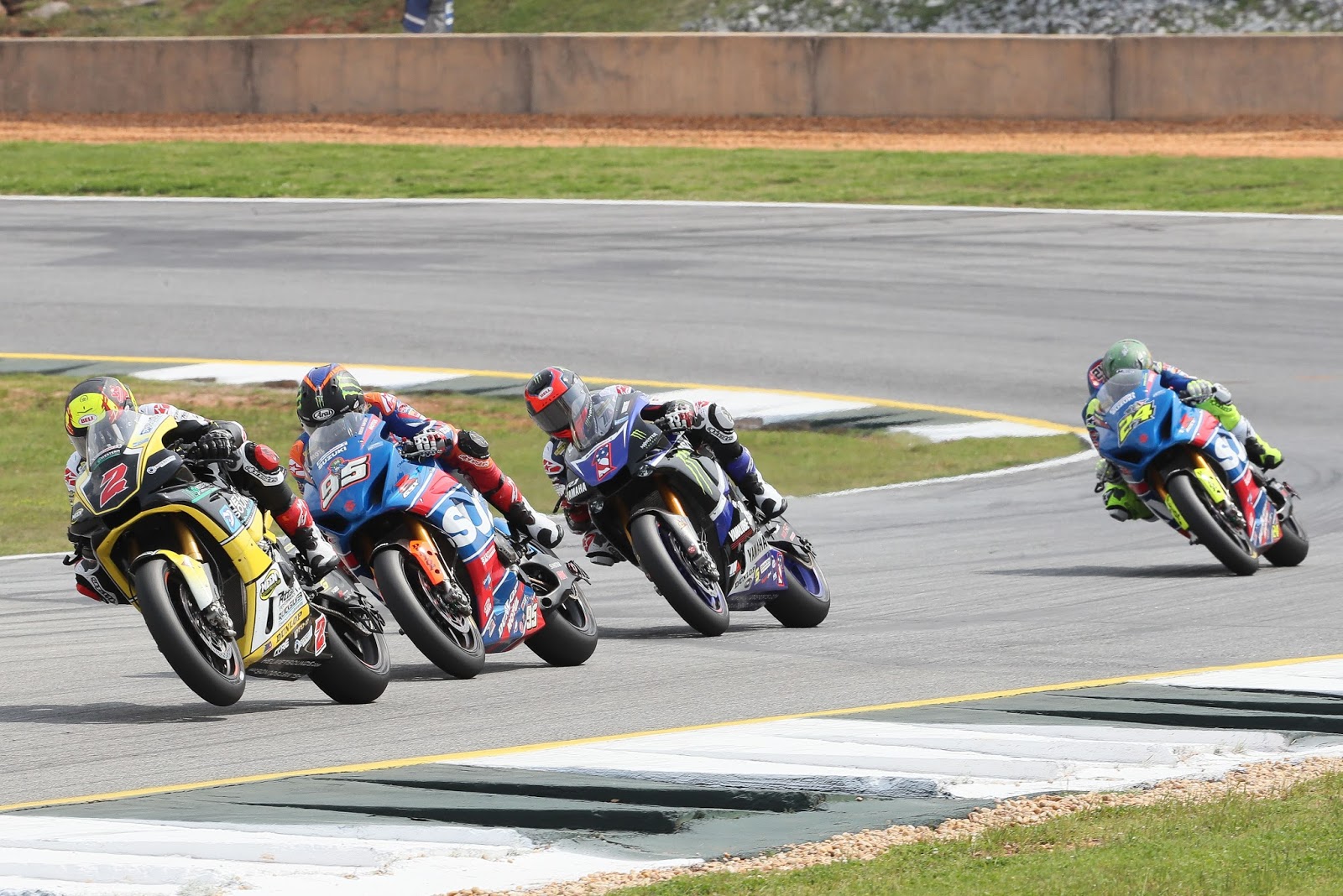
Saturday saw questionable conditions on the track due to adverse weather, and when the racing got underway, all bets were off as to who could master the track. In Superbike, Georgia’s own Josh Herrin battled to the front, and held the lead to the checkered against the Texan Garrett Gerloff and South African Mathew Scholtz. This was Herrin’s first win in five years, and the 2013 AMA Superbike champ commented, “I was on the podium when I suddenly realized this was my first Superbike win in five years! That’s a huge deal for me. I just put my head down and went for it.” Points leader Cameron Beaubier and 2017 champ Toni Elias struggled in the wet-to-dry track conditions, coming up 5th and 4th, respectively.

 In Supersport, Frenchman Valentin Debise snatched the Saturday win from Hayden Gillim and Bryce Prince, while class leader JD Beach struggled in the changing conditions, and finished an uncharacteristic 4th, one of the few times he is ever off the podium.
French Canadian and current points leader Alex Dumas took his seventh win of the season in Junior Cup, in a chaotic race that was red-flagged twice due to crashes.
The Twins Cup race was mastered by Jason Madama, taking his third podium of the season, in a near photo-finish run to the flag. Twins had also seen a series of crashes, with a red flag restart as well.
What a day.

 Sunday saw the return of an epic last-lap battle between protagonists Toni Elias and Cameron Beaubier, as the two swapped the lead and some paint until the checkered flag. Elias squeaked out the win by a mere .046 of a second over Beaubier, another definite photo-finish. Elias dedicated his win to the late Brian Drebber, beloved MotoAmerica race announcer, who died tragically on Thursday in a motorcycle accident, on his way to catch a flight to PittRace for the weekend.
JD Beach jumped back to the top of the podium Sunday in Supersport, in yet another red-flag shortened race for the weekend. With a 98-point lead over Hayden Gillim, Valentin Debise, and the rest of the field, and two race rounds to go, Beach looks to sew up the championship at New Jersey September 7-9. After the win, Beach quipped, “I’m not too sure that would have happened if we would have gone the full race distance, but sometimes it’s better to be lucky than good.”
Alex Dumas did the double in Junior Cup, after battling Renzo Ferreira until Ferreira crashed out of the race, as did Ashton Yates. Young Dumas holds a 64-point lead in the 300-400cc championship standings.

 Stock 1000 ran on Sunday, and Andrew Lee took his second win of the season, after claiming victory at Sonoma. Again, the class saw red-flags flying, and Lee took the win in yet another shortened sprint to the finish.
Whew, what a wild weekend. Stay tuned for more info on the two remaining rounds, New Jersey and Barber, and make plans now to join Born to Ride at Barber Motorsports Park for the climactic final round of the 2018 season, September 21-23.
Tickets- MotoAmerica.com
Race highlights- BeIN Sports USA on Youtube
Race reports- BorntoRide.com

Rob Brooks
 

Friday, July 06, 2018

Race Like A Girl- Jamie Astudillo in MotoAmerica


Not many women currently run professionally in motorcycle road racing, but those that do, have definitely earned their place. Here in the States, in MotoAmerica, there are only three- Caroline Olsen in Supersport 600, Melissa Paris in Stock 1000, and Jamie Astudillo in Liqui Moly Junior Cup. And of these, only one has rewritten the record books- Jamie Astudillo. We pointed out in our May issue that Jamie etched her name in the American road racing archives as the first woman to ever podium in a MotoAmerica professional motorcycle road racing event, when she took third place in race 2 of the season opener at Road Atlanta. Riding for Quarterley/On-Track Racing, Jamie has consistently stayed in the points chase, racing in the top 10 across the first portion of the season. Jamie is “running with the big boys”, and challenging for the front in every race.
I had opportunity to catch up with Jamie at the Road America round in Wisconsin, close to mid season, and spent a few minutes discussing her life and racing, for an article in Born to Ride. I found Jamie to be a winsome, enthusiastic, warm personality off the track, a joy to converse with. Yet underneath the “typical teenager” visage, there lies the heart of a young lion, on the hunt for racing glory.

Jamie's parents originally hail from Ecuador and Costa Rica, but have raised Jamie and her two older brothers in Pennsylvania. Like the famous Hayden racing family, the Astudillo kids have all followed in their father's tracks, racing motorized two and four wheelers since early childhood.
When asked her first riding age, Jamie revealed, "I first started riding at 2 years old, a Yamaha PeeWee 50, and was racing by 3." I was stunned, as most two-three year olds can barely walk, much less ride. Jamie raced quads for several years, then returned to cycles by age 7. Riding motocross was a family activity the Astudillos enjoyed together nearly every weekend, and by age 12, Jamie recognized, as did her parents, that she not only had a great love for racing, she was quite good at it.
Jamie competed in Motocross, GNCC woods racing, even a few hare scrambles. Recovering from a cracked collar bone at age 11, she found her way back to racing within a few months, and discovered she was faster than before, going from a top 10 rider to a front runner. "I was just so hungry to race again, hungry to be up front," she reflected. Watching the last round of the national WMX series race, seeing all those women riding pro on factory bikes, and witnessing Ashley Folick win one of her four Women's MX Pro titles, Jamie told herself, "I'm going to be on that podium one day. This is what I want to do with my life."

After enjoying great success and increased notoriety in Motocross, Jamie received a Facebook message in 2015 from Melissa Paris, MotoAmerica Stock 1000 racer, inviting Jamie to try road racing by joining her team. Jamie stated, "I figured I had nothing to lose. I mean, it's a motorcycle, just another discipline, so why not give it a try?" After a struggle acclimating to pavement, Jamie soon found her pace, and by 2017 competed in the MotoAmerica KTM Junior Cup series. She took an offer to race for Quarterley/On-Track in 2018, the team that produced last year's Junior Cup champion, Benjamin Smith. She hasn't disappointed, filling those shoes quite adequately across the first half of the season.

Jamie has big dreams. She would like to eventually dominate the MotoAmerica Junior Cup class, and aspires to one day move onto the international stage, competing in WSBK Supersport 300, or even MotoGP's Moto3 class.
Being a dad of daughters myself, I know the pride of watching your girls succeed. Jamie makes her parents proud, I know- I could see it in their eyes, as I interviewed Jamie at their team truck. The sky's the limit for Jamie Astudillo, in racing and in life. As a race fan and a "daughter dad", on behalf of all of us at Born to Ride, I wish Jamie all the best success. 
Rob Brooks
*photos by Rob Brooks & Ryan Nolan

Wednesday, April 18, 2018

MotoAmerica at Road Atlanta


The 2018 MotoAmerica racing season roared off its “launch pad” at Road Atlanta, April 14 and 15th, to great fanfare. With nail–biting racing, accompanied by the gravity-defying stunt shows of the Tony Hawk Experience and American Motor Drome’s Wall of Death, MotoAmerica put on a weekend spectacle like no other.
The “young guns” of Junior Cup (300-400cc) led off both days, racing for glory in the MotoAmerica entry-level class. Of particular note to Born to Ride was the first-ever female podium in American road racing history, as Jamie Astudillo took 3rd place on Sunday, after a 4th place finish on Saturday. Dads of daughters everywhere were proud.
The brand new Super Twins class featured a grid full of Suzuki SV 650s and Yamaha MT-07s. The deep throaty roar of V and in-line Twins across the grandstands was palpable. We hope this class will continue to grow in number of racers and popularity.


The Supersport 600 class saw a new rivalry develop, between veteran Yamaha Factory rider JD Beach and Hayden Gillim, who rode Superstock 1000 last year. They split the podium both days, swapping 1st and 2nd on two races.
Superbike 1000 also saw the return of dominant performances by defending class champion Toni Elias, demonstrating why he’s a renowned, world-class competitor. Toni took the checkered flag in perfect conditions on Saturday, then in adverse, rainy and windy conditions on Sunday. A true champion in every respect. Toni will be hard to catch this year, much less defeat.


We had opportunity to talk with Tony Hawk, after he took a VIP 2-up “hot lap” ride around Road Atlanta with retired racer Chris Ulrich. Asked what he thought of the experience, Tony exclaimed, “That was like the best, customized rollercoaster ride ever! When Chris pinned it across the front stretch, hitting 160 mph, it was a level of adrenaline rush and fear that I’ve never experienced before. Incredible.” Coming from the skateboarding legend himself, that spoke volumes.
The howl of uncorked motorcycle engines, the rush of triple digit speeds screaming by, and the drama of racers battling for position across the track course- a weekend of MotoAmerica racing is indeed an adrenaline rush in every respect, even for spectators.


World class American road racing is back, thanks to the vision and leadership of Wayne Rainey and company. For the season schedule, results, standings, and highlights, visit MotoAmerica.com. If a race is held anywhere near you, make arrangements to attend- you’ll be so glad you did. Catch the races broadcast live on BeIN Sports and BeIN Connect. And of course, Born to Ride will report on all the action, as the race season progresses.
We hope you are as excited as we are!

*More & better photos coming up in the May issue of Born to Ride.

Sunday, April 08, 2018

MotoAmerica Preseason Observations


Spring is here, and racing is in the air.
MotoAmerica, the nation’s premier motorcycle road racing organization, returns for its 4th season. Helmed by racing legend Wayne Rainey, 3-time World Gran Prix champion, MotoAmerica is returning the sport to its former glory days of the 1960s-1990s. With race weekends spanning the country (3 of which run here in the South), the season kicks off at Road Atlanta with great fanfare, including exhibitions by Tony Hawk & Friends, the infamous American Motor Drome Company “Wall of Death”, a Kid’s Zone and the “Caffeine & Kickstands” custom bike show.
I talked with Paul Carruthers recently, MotoAmerica’s Communications Manager, about the 2018 season-

Rob- 2017 was such a thrilling season: The epic battles between Toni Elias, 2016 defending champion Cameron Beaubier, Roger Hayden, and veteran Josh Hayes; Toni taking the Superbike title in the end; Garrett Gerloff winning his 2nd consecutive Supersport title, etc. After watching the preseason testing, who’s looking strong to threaten for the titles this year?
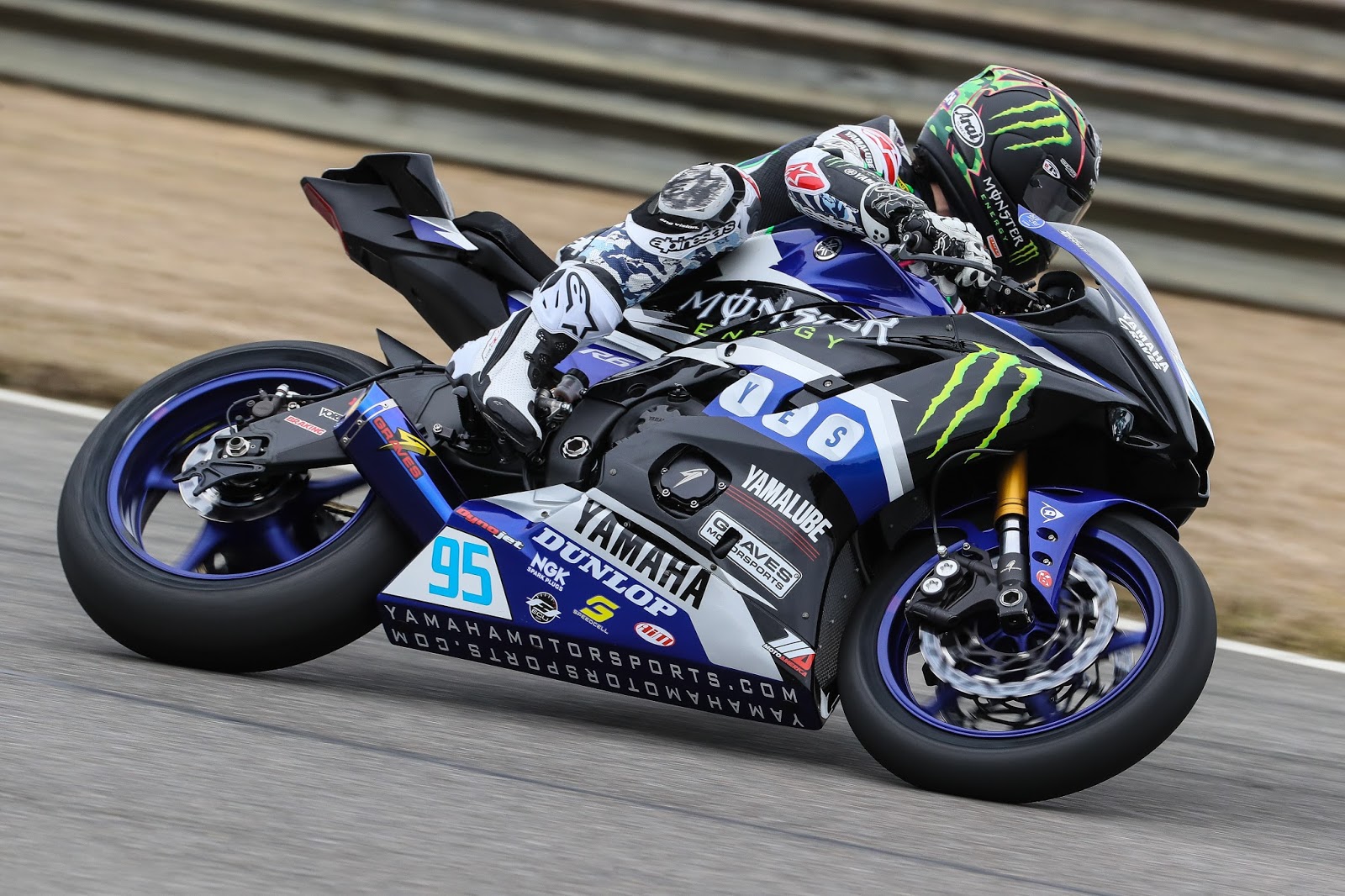
Paul- The preseason has been a good one, and has shown just how close we expect the racing to be in the Motul Superbike class. Cameron Beaubier has been impressive in coming back from injury to lead all the tests and you can tell that he's full of confidence and wants that number one plate back! We all know now how strong Toni Elias can be, so counting him out would be silly talk. There's also a lot of fast young guys jumping up to Superbike this year, riders like Mathew Scholtz and Garrett Gerloff.
Rob- There’s been some realignment of the classes this year, and the introduction of Super Twins, which I think will be thrilling to watch- definitely to hear!
Paul- We think the Twins class has a good future. It's normally a big class in club racing and we think we'll see a lot of local guys showing up to race. It's an interesting class, and we might see a lot of different things out there on the track. Should be fun to watch and, as you say, listen to!
Rob- What can fans expect to see in the racing this year?
Paul- They will see great racing in every class. The Junior Cup will be loaded with talented kids this year, now that it's open to all the manufacturers. Superbike will be a thriller at every round and Supersport will be closer than most people think.
Rob- What can fans expect to experience at a MotoAmerica event this year?

Paul- We are making a big push to make our events truly “events”. While our focus will always be the racing, we are ramping up the other activities so that our fans will have plenty to do every single day at our races. At Road Atlanta, for example, we're having Tony Hawk and his team come in to give the fans skateboarding exhibitions on a giant ramp that will be in the paddock. (Road Atlanta round will also feature the "Wall of Death") We will have musical acts at most of the events, so I think people will be impressed with MotoAmerica in 2018.
Rob- beIN Sports network will be carrying all the races this season, right?
Paul- Between beIN Sports and beIN Connect, all of our races will get live coverage. It might switch around as to what races are on what platform, but they will all be covered.
Rob- Road racing has a long history here in the States. What do you see as its future? A return to the glory days of the 60s-90s?
Paul- It's a different time, but we’ll get it to where it needs to be. We want competitive racing, a chance for our riders to race internationally and we want to provide events that our fans can enjoy from morning ‘till night.

Rob- Can viewers also find and follow the action on MotoAmerica’s website?
Paul- Yes, we’ll have timing and scoring on the site from every event so people at home can follow the action. We are also packing the site with quality content about our series, our teams and our riders with both the written word and video content.
Rob- Born to Ride will be there, covering the Southeastern rounds, and running regular updates on the standings as the racing progresses. It’s going to be an exciting season.
Paul- As always, we look forward to seeing you guys there, and we can't wait to get started!
Don’t miss the speed and roar of American motorcycle road racing- Visit MotoAmerica.com for tickets to every championship weekend, and catch the races on beIN Sports and beIN Connect all season.

Monday, January 01, 2018

2017- A Look Back

 
2017 was an eventful year in American motorcycling. Reflecting over the previous 12 months, clearly much has transpired in the two-wheeled world. Its been both exciting and discouraging. There were a great many stories from 2017 in motorcycling, but these are a few of the ones I most readily remember-

The Demise of Victory Motorcycles- After 17 years, Polaris scuttled the Victory line, a JD Power & Associates quality-leading motorcycle brand. The move shocked the industry, and those of us in moto-journalism. The move was understandable, with Polaris planning to focus greater efforts on the highly successful Indian line, but I was stunned, nonetheless.
*Oh, and within weeks, Erik Buell Racing shut down operations...again.

The Death of Nicky Hayden- One of America's great motorcycle racers, Nicky was beloved the world over, not just here in the States. The "Kentucky Kid" was an AMA Flat Track champion, AMA SuperBike champ, and 2006 MotoGP World Champion. His cycling accident and sudden death in Rimini, Italy horrified the motorcycling world, as millions grieved his passing. I personally sat and wept at the news. Nicky will be sorely missed.

Harley Davidson's Sweeping Changes- Late summer, H-D announced and debuted radical changes in their lineup, dropping the venerable Dyna line completely after 27 years. The all-new Softail line saw several Dyna models redesigned and dovetailed in, as well as some brand new models- most notably, the Fat Bob, all with the new "Milwaukee Eight" powerplant. I had opportunity to ride a couple of them, the Heritage and Road King, and was very impressed.

American Flat Track & MotoAmerica- AFT exploded in popularity in its first year away from the AMA, and MotoAmerica dramatically expanded its reach in its 4th season. I'm very glad both are back, and I hope these signal a revival of interest in American motorcycle racing.
*Interesting note- the most talked-about American motorcycle of 2017 wasn't even a production bike- the Indian FTR1200, a factory-modified Scout based on their highly successful (and AFT-winning) flat track racer.

The Revival of Retro- All the major brands have trotted out spectacular bikes combining modern amenities with retro (60s-80s era) styling. BMW's RnineT bikes, Triumph's entire Bonneville line, Honda's CBR1000R Blade, Yamaha's XSR900, Kawasaki's Z900, Ducati's Scrambler line,...I could go on. Us old guys love the nod to the bikes we grew up riding and loving, and the younger crowd clearly revels in the nostalgia these bikes recall. Its a great time to be riding!

With all the concern over the flagging bike sales in America, and companies seeking new riders among the younger generation, 2017 was a year of reassessment in the industry. These are but a few of the events and developments of the past year, the ones I most remember. I hope 2018 will see even more in the way of good news.

Wednesday, November 29, 2017

Wayne Rainey- Anatomy of a Legend (full interview transcript)

Here is the full, unabridged transcript of my conversation with Wayne Rainey, with additional photos.


Debate often arises in motorsports over the definition of a legend, and what constitutes legendary status. Is it the number of wins across a career? National and/or world titles? Is it philanthropic work, contributions to the sport and industry? Overcoming tragedy or adversity? Perhaps it's personal honor, integrity, influence? By any definition-
Wayne Rainey is a legend.
In the span of a decade, Rainey amassed a resume of wins and titles that would cement his status as an icon of motorcycle road racing. He won the AMA National Championship in 1983 and 1987, and claimed the coveted Daytona 200 title in '87 as well. Rainey moved onto the world stage, capturing the renowned Suzuka 8-Hours endurance race with teammate Kevin Magee in 1988. Rainey then dominated the GP World Championship for three years, sweeping the 500cc premier class from 1990-92. A career-ending and life-altering injury changed everything in 1993, resulting in permanent paralysis from the chest down.
But Wayne Rainey didn't stay down.
He reinvented himself for the rest of his journey, managing AMA and GP teams, participating in SuperKart racing, and ultimately birthing the dream that would become MotoAmerica.
I had opportunity to sit down with Wayne for a few minutes, at the final round of the 2017 MotoAmerica season at Barber Motorsports Park in Birmingham, Alabama. What ensued became a candid, insightful conversation, revealing something of the heart and soul of the man.

RB- I remember following your racing career back in the day. The Suzuka 8-Hours was impressive! Very few people even know what that is.
WR- It's a bad-@$$ race, for sure! I was racing Gran Prix's that year, running at the highest level in motorcycle racing, then went and did the Suzuka, and realized I was NOT at the highest level! The Japanese take that race, and only that race, as the number one race they all want to win, and Gran Prix second. It was so exciting to win that.
RB- I can't even imagine! At what age were you first introduced to motorcycles? How did you ever catch the riding/racing bug?
WR- My father got into soapbox derby, go-cart racing, and then motorcycles. He had a 90cc Yamaha in the mid-60s, and was a tinkerer as well as a rider. I was about 6 years old when I first started riding, on a little Honda Cub. The Cub was kind of tall for a 6-year old, so my dad put a seat right where the fuel tank meets that under bone. Handlebars above me, seat hitting my back, and I was sitting down in it! First time I ever rode it, we were in the garage, and he said, "Keep your foot on the shifter, give it a little gas, and let off the shifter." I wheelied that thing right into his cabinets! Needless to say, I was a little intimidated, running out of the garage crying! I came back though.
RB- Indeed you did. When did you first start competing?
WR- I started racing at the age of 9. In Southern California, we had ten different race tracks, and could race seven days a week. A definite hotbed of dirt track racing. We lived 10 miles from Ascot Park, and my dad built bikes to race the Ascot Half-Mile. I'd go with him every Friday night as a young lad, and learned all the riders by name, their numbers, everything about them. I ate, slept, and drank the racing. When I was old enough, I finally got to go do it myself.

 RB- You really cut your teeth in flat track.
WR- Yeah, I didn't do my first road race until 1980, when I was 20 years old. Never even been on a track before then.
RB- What attracted you to road racing?
WR- I was dirt tracking and Kawasaki wanted to sell KX250 engines to dirt trackers. They contacted me, a “So Cal” kid. They had approached Eddie Lawson, asking "Who do you see that we could develop that motor with?" Eddie recommended me, so they reached out to me- "We got this engine, we'd like to build a short track chassis out of it. Will you run it? We'll buy your tires, pay your gas,..." and I quickly said, "You got a deal!" So we went out and had some success with it, and they soon asked, "Have you ever considered road racing?" I had not, never really been interested in it aside from reading about it in the magazines, so they sent me to the Keith Code's California Superbike School. I went through the training, progressed pretty quick, and they asked if I wanted to try a race. So I tried it. I ended up winning 15 of my 16 races! They later contacted me again, saying, "There's an AMA National race in Loudon, New Hampshire. If you can be there in three days, we’ll have a bike there waiting for you." I was going to race in my first pro 250 novice class. A buddy and I drove cross country to the race, still with my dirt track leathers and gear. It rained during the race, and I had never ridden the bike, never ridden on this track, never ridden in the rain, and we won the race by 20 seconds! Next day, Kawasaki showed up at the race track with a contract to race Superbikes for them the next two years.

 RB- Do you think your flat track racing experience gave you an edge in any way, when you transitioned to road racing?
WR- I think so, and it helped Kenny Roberts before me. Freddie Spencer did it that way too. All the American world champions had a flat track background. The 500cc GP bikes were wicked machines. It took a special style to adapt to them. The Europeans are doing it now, but they weren't back then. Rossi, Marquez, all those guys, work off-season on dirt track, but we were doing it decades ago. So I'd say it was an easy transition, easy translation of skills. The natural dirt trackers were always the Americans.
RB- I remember when the grids and the podiums were filled with Americans.
WR- We didn't know how good we had it, did we? Whole front rows would be Americans, podiums would be all Americans,... Now, there's no one in the world championships, in MotoGP. There's P.J. Jacobsen running well in World Supersport, but sadly, with Nicky's passing, P.J. is it, on the world stage. We hope to change that.
RB- There's been a lot made of your rivalry with Kevin Schwantz. How did that develop? Did something happen, or was it just two fierce competitors battling it out across the years for dominance?
WR- Yeah, by that time I guess I was kind of an established guy. Schwantz came along, with a lot of natural talent, and I saw he was going to do whatever it took to beat me. He really raised my game, because I didn't want him to beat me. We raced each other really hard, much harder than the other guys. I guess we didn't like each other, because we didn't like how we were treating each other on the track! We were both determined to beat the other. I like to think I got the best of Kevin every single year, but the rivalry certainly made us both better.
RB- But in the end, there can be only one.
WR- People win championships for all kinds of reasons. But the one thing that's always the same is, the guy with the most points at the end of the season, wins. I was a very consistent guy, was on the podium most of the time, and ultimately, consistency wins championships. And it wasn't just Kevin I was battling. There was Mick Doohan, Eddie Lawson, a lot of really huge names out there then. Exciting times for racing.
RB- You ran for Kenny Robert's teams a number of years, right?
WR- I ran for him '88-93, for six years. We had known each other, and I had started hanging out with him a bit, so he put a team together for me to race in Europe. I ran 250cc bikes my first year with him. Really didn't think I was ready for it, but we did it, and I got to see the future.
RB- Would you say you really peaked, really took off, under his tutelage? Did he help refine, tune your skills even more?
WR- Yeah, definitely! Kenny and I really clicked. He had plenty of riders under him who didn't have the success we had together. I think he saw in me someone who would do everything to get the most out of myself, my team, the machine, so he fostered that environment for me. A lot of my teammates came and went, but there's no doubt the friendship, relationship we had was special.

 RB- 1984 was a tough year though.
WR- Oh, yeah, I hated it that year, thought Kenny was a prick! We had to push-start the bikes, and often by the time we got started, I was like 20 seconds behind the pace car! So not only was I having to catch and pass the pace car, they usually had no idea some weenie was behind them! And I'd have to listen to him as I was push-starting the bike, yelling, "Push harder, you $!&?-head!" But he pushed me, for sure. Made me a better racer.
RB- It’s uncomfortable for me to bring up, but I watched footage of your fateful crash at Misano in '94. A major life change, in every way.
WR- Yes it was.
RB- How did you personally work through that, overcome it, and reinvent yourself?
WR- (pauses to reflect) That was 24 years ago, September 5. So it's not really that long ago, and yet 24 years is a long time. I'd probably now do a few things differently, but here was this 33 year old man, world champion, did everything on my own, then suddenly, I needed help going up a step, or grabbing a cup, or anything. The way you do everyday functions, how you get in and out of the car, or the bathroom and shower, the bed, everything changes. The first thing you see in the morning is that wheelchair, and the last thing you see at night is that wheelchair. So it's become my legs. You either adapt, or you die.
RB- Adapt or die- physically, mentally, emotionally, spiritually.
WR- It was a very tough time. It took a few years, a lot of mistakes, some deep pockets of grief, but you know, I have a strong faith in the Lord, and that pulled me through, that's what worked for me.
RB- You worked through it all, and your faith carried you.
WR- I had a 10 month old son at the time, and he only ever knew me in a chair, so I had to be strong for him, had to show him that his dad's going to be challenged, but everyone is challenged in their own way, every single day. You can whine about it, or pull your pants up like a big boy. It still could get worse too, I don't know. So I just live every day.

 RB- You've accomplished so much in the sport, on and off the track. What are your fondest memories, proudest achievements?
WR- I have so many memorable moments, and I'm still creating them. Obviously, being a very successful motorcycle racer, to have been able to make a career out of it. I loved racing motorcycles! I loved the competition, loved the challenge, loved racing at the highest level. I loved every win that I got, loved every 10th place that I got. I remember the battles, the rivalries. So I don't think any one particular thing sticks out more than others. I just try to be a decent dude, show courtesy to everyone I meet. Now, in my current situation, I try to pay attention to what some people have to go through when they're physically challenged. I'm sensitive to that.
RB- To me, what you've endured, where you are now, only adds to your mission.
WR- Every day we wake up, we have no idea what it holds, where it will take us. Nicky Hayden is a perfect example of that.

 RB- As I stated in my article about him after his death- life is fragile, life is fleeting, so live for a higher calling. You're still making a difference, in racing and beyond.
WR- I think you're right, only because I know what the outcome is now. I didn't when I was still racing. Won three world championships, on track to win a fourth. Where do you go from there? Some say the only place to go is down, but I didn't see it that way. I just wanted to keep winning as long as I could, and keep getting better. I was getting to the point where I wasn't going to accept anything but 1st.
RB- Looking at modern racers like Rossi, Marquez, Jonathan Rea- it doesn’t matter how many they’ve won, the next one is still a thrill.
WR- Rossi, he’s a special case. He came up through a different era than I did, but that hunger to win is still there with him. He obviously still has fun doing it.
RB- How was the dream for MotoAmerica born?
WR- My partners, Richard Varner and Terry Kargas, were building a motorcycle and through a mutual friend, asked if I would come help. I was pretty far away from the sport then, but that relationship started me back in the industry, calling my old contacts about parts. This bike had the look of a 1980s road race bike, but in actuality, it was a 2010 Yamaha R1. Back in the sport, I was getting a lot of questions- “What’s going on with American road racing?” I still had a relationship with Dorna (the international sanctioning body), so I started thinking, “There’s not many Americans; maybe I should start a young rider series.” There were only three U.S. Gran Prix races left, and one World Superbike race. My idea was, run a young spec class, and run it in the World Championship races held here in the States, Saturdays and Sundays of each, about an 8-race series. Joe Campbell from Laguna Seca asked me, “Why don’t you just fix the AMA racing?” Initially, we couldn’t get a deal with DMG, so I returned to my original idea of doing our own thing. That started gaining momentum and support, so pretty soon the DMG came back and said, “Hey, let’s talk about this again.” We worked a completely different deal the second time, so that’s basically how it all started. It took time to evolve, and it was never something I thought we could achieve, but I figured, unless you go all-in and try, you’ll never know. I had the right partners, for sure. Chuck Aksland from my Gran Prix days came onboard, joining Terry and Richard with me, and all these pieces came together at the right time. So now we are trying to make a go at it, revive American road racing.

 RB- Here at the end of your third season, how would you rate the progress?
WR- You know, from where we started, late in 2015, I think our skeptics are now fans! And some of the manufacturers, who thought we’d be gone after three races, see we are still here after three years. We began with live-streaming on Fans Choice, and now we have live TV with BeIn Sports. We have a good schedule, we have solid teams, and year 4 will see an all-Superbike class. We made changes this year to the Stock 1000 class that shows they can be very competitive. We have a team that the rider (Kyle Wyman) drives his truck to the race, engineers his own bike, and he almost won the race in New Jersey! If a guy can do that against the factory riders, we’ve done the right thing. So many of the Stock 1000 guys have run well this year- Hayden Gillim, Jason DeSalvo, Mathew Scholtz, all running up front with the factory guys. This next year, it’ll be an easier sell for them, that they will be Superbike teams, instead of Stock 1000.
RB- I’ve been watching the growth of MotoAmerica, parallel with the explosion of American Flat Track. They both seem to be feeding off the growing popularity of each other.
WR- Yeah, basically, dirt track and road racing are cousins. They’ve always been in the U.S. But they are run separately now, and actually are facing the same problems we have here. Indian is huge there, and they have the best riders, filling the podium at nearly every race, and here, we’ve got four factory bikes, and then you’ve got everybody else. So we are all trying to make it more marketable, so they all can go out and find sponsorships. We’ve had three years to try and stabilize our sport. We think we’re pretty stable now, and with the jump to Superbike, we’re going to now sell it to the fans.
RB- What do you see as the future of road racing in America?
WR- I hear racers say, “Oh, we’ll never get back to the level of the Europeans. They’re doing everything we did except they are starting at a younger age. They have more racers, better tracks, etc.” I say, give up that attitude! I tell you what, I’ve said, “Unless you think you can go over and beat those guys, they’re going to wax you, because you’re going to their house. We’re Americans. There’s a culture here they will never have. They don’t live here, didn’t grow up here.” As Americans, we automatically think we need to be better. I want our riders to believe that, to believe in themselves.
RB- That day is coming, I believe, soon.
WR- We’ll soon see the rider who believes in himself, has the natural speed, and the desire to go race in MotoGP, which means racing in Europe, at the highest level. We are trying to make MotoAmerica a competitive championship where, when a racer is ready to make that step, they’ll only have to learn the tracks and the bikes. They’ve already done the racing here.
RB- In the next year or two, what is MotoAmerica positioning itself to do to bring road racing back into the American consciousness?
WR- Honestly, we need guys like you that believe in what we’re doing, to help us build it up. We want to recapture the fans we lost, as well as go get new fans. It’s a new generation. It’s not, “win on Sunday, sell on Monday” anymore. We know we have to host an event, with a motorcycle race. A lot of things happening at the track- bands, fashion shows, bounce houses and activities for kids, vintage shows and races. People love seeing those old bikes, hearing them run around the track! We have to remember our past. That’s where we came from. We want to build the event, market that, invest in that. All of our investment has been into stabilizing. Now, we can start working on growing.
RB- I’m excited about the future of American road racing, glad you are at the helm of it. I’m not just a writer, I’m a fan.
WR- Well, we appreciate you coming out and supporting us. I hope every time you can come out, you see something new, something exciting.
RB- Your riders have a passion and competitiveness that draws fans. I saw that evidenced at the Road Atlanta round, when Beaubier (2016 champion) and Elias (now the 2017 champion) nearly came to blows in the press room following the race.
WR- Yeah! I want the championship to mean something. It’s got to be real. That was raw, real.
RB- Even the 600 Supersport class- I talked extensively with Garrett Gerloff (now the 2-time class champion), a young man of deep faith, humility, and integrity, and yet a fierce competitor on the track. To me, he well-represents the future of the sport here in America.
WR- Well said! If he goes up to Superbike, and starts to run with Elias, Hayden, Beaubier, I’m telling ya, he’ll fly out of this place. I told him, “Everybody is waiting to see who that next guy is going to be. Why can’t it be you?”
RB- I certainly agree. Thanks for your time, Wayne.
WR- My pleasure! Thanks for coming out!
American Road Racing is back. Check out MotoAmerica on the web, social media, and on BeIn Sports.
Rob with Wayne, Barber Motorsports Park, final round.
*All photos courtesy of MotoAmerica and the author.

Wednesday, May 03, 2017

MotoAmerica

This past weekend I had the opportunity and privilege to cover MotoAmerica road racing at Road Atlanta, for Born to Ride magazine. I spent three thrilling days enjoying the rush and roar of the races, had the honor to meet and talk with many of the racers, and caught the passion and dedication of Wayne Rainey and his MotoAmerica staff. It was a weekend I will never forget.

 
Friday I picked up my press credentials, compliments of MotoAmerica and the good folks at our own Road Atlanta. I photographed and enjoyed the practice sessions and early qualifier rounds, and met the great Josh Hayes and Danny Eslick down in the paddock area. Very friendly, down-to-earth guys.


I had the honor of bringing the Saturday morning invocation, then hit the infield for various shots of pole/grid qualifying around the track. The classes consisted of WERA 1000 semi-pro, KTM RC 390, Supersport/Superstock 600, and Superbike/Superstock 1000. A full slate, indeed. You definitely get your fill of superb racing action, up close and personal, every day. It's an adrenaline rush, just standing along the fences, watching them roar by. I've ridden track days on Road Atlanta several times myself, so I know first-hand the thrill of speed on it. The actual Saturday afternoon Race 1 runs were exhilarating, to say the least.

 
Between races, I had the privilege to meet several more racers, notably Garrett Gerloff, 2016 Supersport 600 national champion, and Bobby Fong, top contender in the Superstock 1000 class. Both are fine young men, very humble and grateful for the opportunity and abilities to compete at this level. Garrett is very vocal about his faith in Jesus Christ, giving thanks for his successes (took 1st in Race 1), and I find that commendable.
 
 
Sunday saw the rivalries intensify, as the Race 2 runs got underway. I witnessed several low-side crashes, all heart-stopping, but nothing could prepare me for what happened to Josh Hayes about 4 laps into the Superbike/Superstock 1000 race. Hayes low-sided out in turn 1, bike and rider sliding into the run-out gravel. Josh was unhurt, but his bike dug in, bounced off the air fence, and careened about 20 feet in the air, clearing the outer fence and clipping the bottom of a Road Atlanta billboard, before landing in the woods off the property! I had just parked at that corner for some photos, and literally just missed it. Tony Elias, Roger Hayden, and Cameron Beaubier battled all the way to the finish, in one of the most thrilling races I've seen in years.

Shattered carcass of Hayes' bike

I have been an ardent fan of motorcycle road racing for a number of years, but sadly, had lost interest in American road racing, in the waning years of AMA management. MotoAmerica taking the reins three years ago, I think, was exactly what our sport needed. Wayne and company are running an outstanding series. Full article forthcoming, in one of the summer issues of Born to Ride.